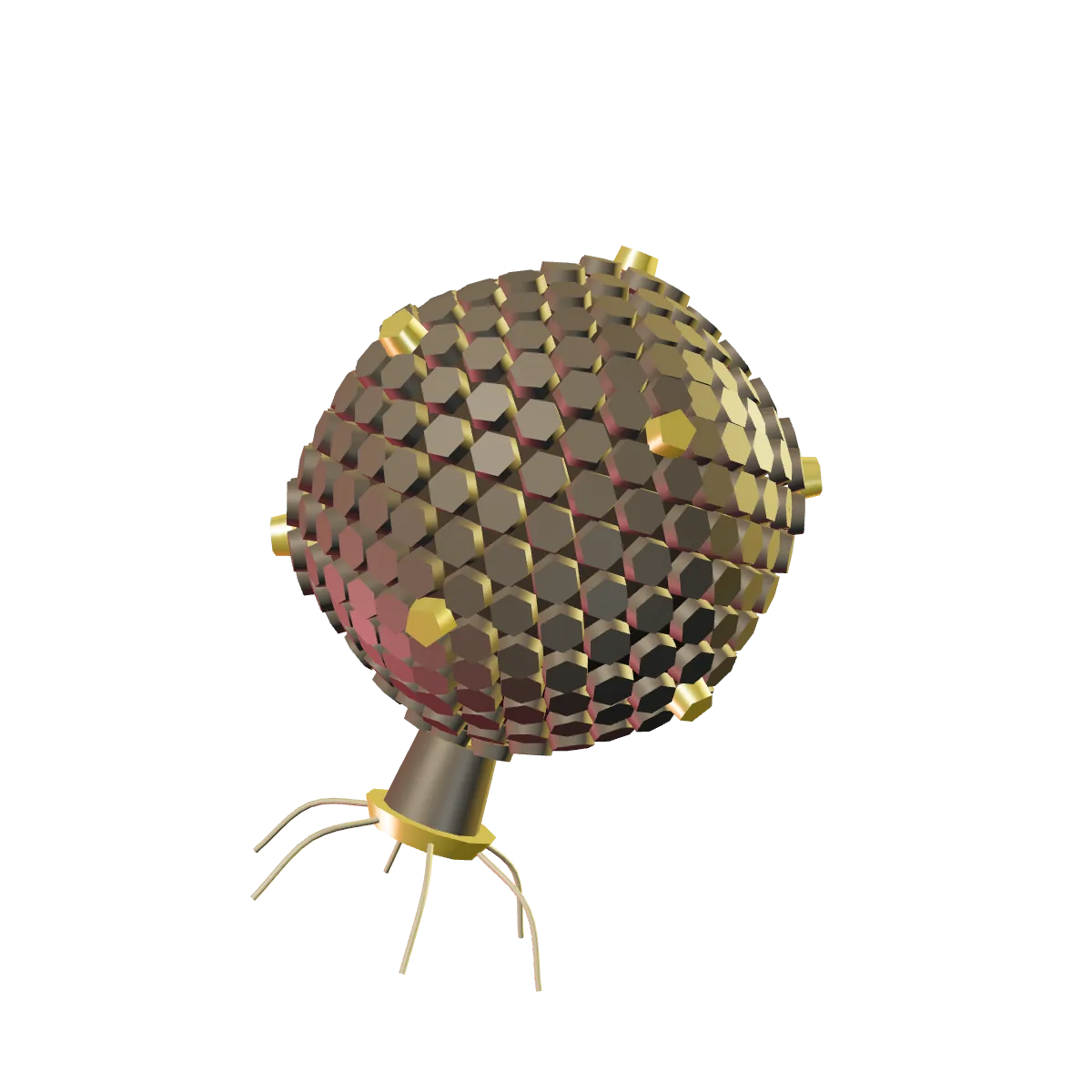
( Specimen · phage N4 )
Michael Baffour Awuah
Phage biologist at Texas A&M. I study how phage N4 decides when to kill its host, and I build the open tools that make the work reproducible.
( Adsorption )
I’m Michael, a phage biologist in the
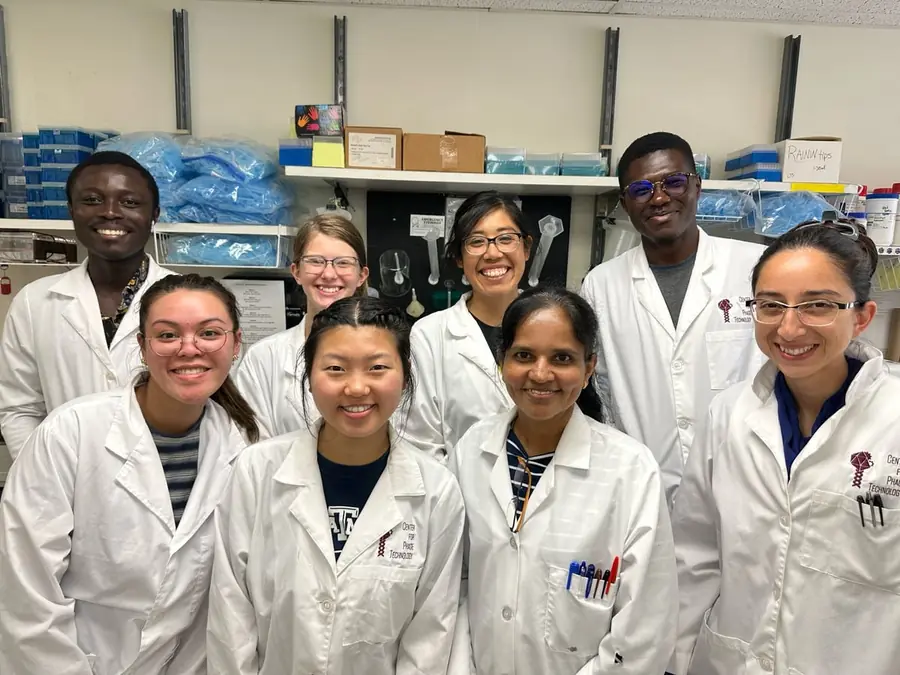 Ramsey Lab
at Texas A&M’s Center for Phage Technology. I hunt phages
Ramsey Lab
at Texas A&M’s Center for Phage Technology. I hunt phages
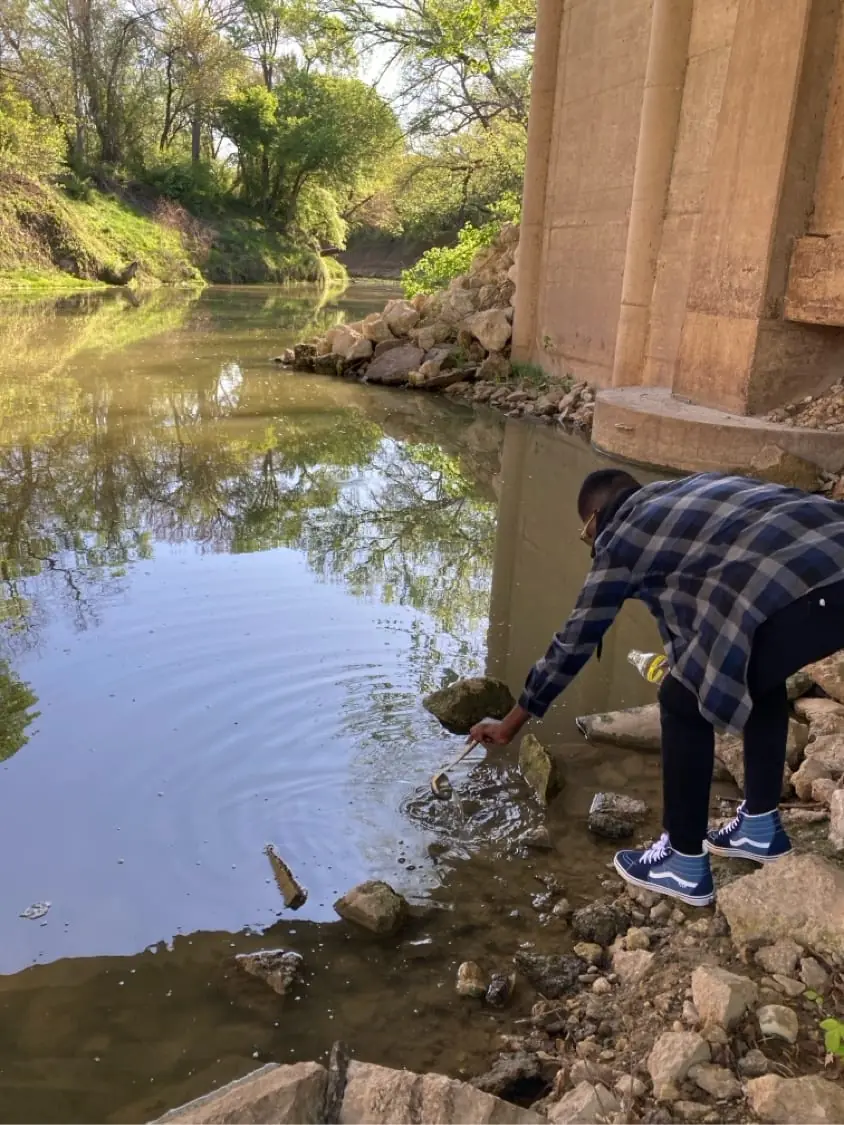 out of the environment,
take them all the way
out of the environment,
take them all the way
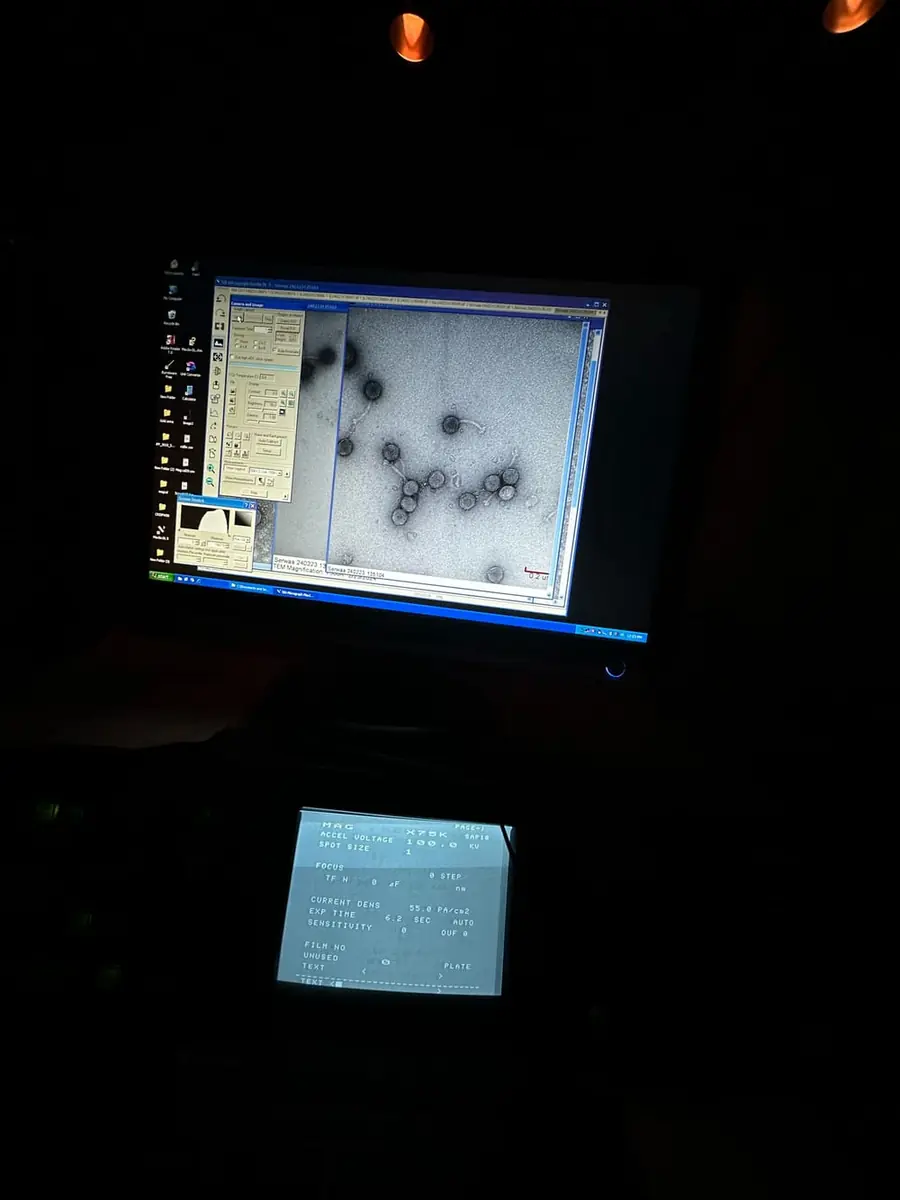 to the TEM grid,
and ask one question of phage N4: how does it decide when to burst its host?
to the TEM grid,
and ask one question of phage N4: how does it decide when to burst its host?
( The protocol )
My first-author preprint shows N4 lyses through a
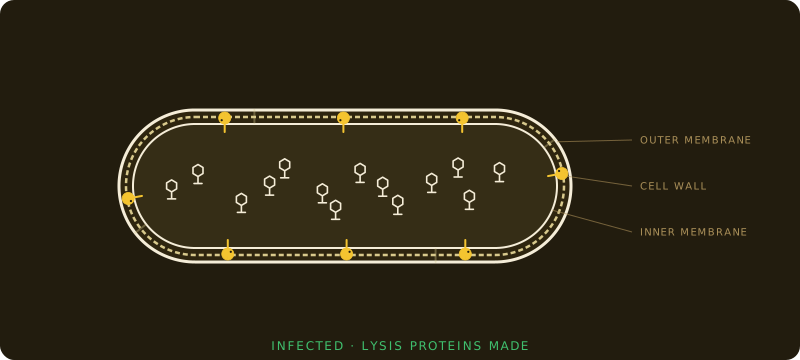 SAR endolysin–holin system,
and my thesis found a new regulator of that decision. Along the way I built
SAR endolysin–holin system,
and my thesis found a new regulator of that decision. Along the way I built
 the tools the bench needed,
and one of them,
FigureLab,
is now cited in another lab’s published paper.
the tools the bench needed,
and one of them,
FigureLab,
is now cited in another lab’s published paper.
( Programme notes )
Defending in 2027 and available for 2027 starts. First choice: a postdoc in phage or bacterial molecular genetics. Also open to biotech R&D, translational research, AI for science and scientific software. Get in touch.
( Latent period ) Inside one infection
- Scroll, and follow one E. coli cell from the moment phage N4 arrives to the moment it bursts.
- Landing. An N4 particle lands on the cell surface.
- Injection. It injects its genome. The empty capsid stays outside.
- A factory. New phages assemble inside, and the infected rod grows longer.
- Holding on. More phages arrive, and N4 holds lysis off: lysis inhibition. The cell keeps building.
- The switch. The gp63 pinholin opens holes in the inner membrane, the gp61 endolysin is released to cut the wall, and the rod contracts from the poles into a sphere.
- Burst. Spanins break the outer membrane and the cell bursts, releasing its progeny: more than 3,000 phages from one cell.
- The question. What sets that timer, and how N4 holds it, is what I study. See the research ↓
About Me
Phage biologist at Texas A&M's Center for Phage Technology, working on how N4 times its lysis and building open tools alongside the bench.
- Position
- PhD candidate, Microbiology
- Lab
- Ramsey Lab, Center for Phage Technology, Texas A&M University
- Focus
- Lysis timing and host–phage interactions in bacteriophage N4
- Defence
- Expected 2027 · open to postdoc and industry roles
- baffour@tamu.edu
- Profiles
- ORCID · Google Scholar · GitHub · LinkedIn
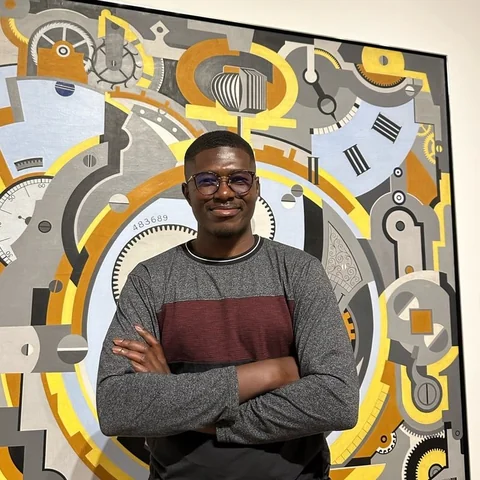
Howdy! I'm a PhD candidate in Microbiology at Texas A&M University, in the Ramsey Lab at the Center for Phage Technology. My project decodes lysis inhibition in bacteriophage N4 — the phenomenon where a phage senses that new hosts are scarce and holds the infected cell together, turning it into a high-output virus factory instead of bursting it early. Understanding how that decision is made is the part I can defend; where it could lead — phage preparations made to order, and further out, programmable microbial biofactories — is the part I want to work on next.
Alongside the wet lab I build open-source tools that make phage research more reproducible, accessible, and efficient — every one of them started as a real problem someone next to me hit, and most are browser-based, privacy-first, and zero-install. I build them with AI in the loop, and say so plainly. That is about the software: the experiments, the analysis and the interpretation behind my papers are mine. On the tools I own the problem, the method, the data model, the edge cases, and what counts as a correct answer for a phage experiment — and nothing ships until it reproduces a result I already trust from my own bench. The full CV has the education and the complete skills list.
Outside the lab I play soccer most weeks, grew up on the Black Stars, and built a starting XI out of the skills this PhD runs on because the metaphor was sitting right there.
My research, in thirty seconds
Cut from this site's own screens for X and Instagram Reels.
- The question. How phage N4 decides when to kill its host.
- The lysis model. The figure below steps through rapid lysis until the cell bursts and its phages stream out.
- The playground. A run of the lysis-curve simulator, with N4 holding lysis off.
- The tools. Open software, including FigureLab, used in published research.
Thirty seconds, vertical (1080×1920), silent.
Research Focus
Bridging molecular virology and engineering to unlock the potential of bacteriophages — from lysis decision-making to programmable biofactories.
The headline finding
Bacteriophage N4 deliberately delays lysing its host, turning each infected cell into a high-output virus factory that releases over 3,000 phage per cell, bursting asynchronously from about three hours post-infection rather than ending early with a fraction of that — the classic observation of Schito's ultrastructural study of N4 development (J Virol 1974), at flask scale in a single host. My first-author preprint shows N4 lyses through a SAR endolysin–holin system and maps genomic regions — inside and outside the lysis cassette — involved in holding lysis off. Separately, my thesis work identified a novel regulator of that decision — an essential gene whose mutation drives the phage into rapid lysis, which is how we know it gates the timing. That manuscript is in preparation, so the gene itself stays unnamed here. The question isn't when a phage kills; it's whether to give up the cell — and N4 keeps choosing to hold on.
Where I'm taking it → Reverse-engineering this timing switch into a control knob for high-titer phage production and programmable microbial biofactories, while shipping the open analysis tools that make those experiments reproducible for the whole field.
What I have not done
To be plain about the distance: this is mechanism, in a model E. coli phage, at flask scale. Turning a timing knob into a therapeutic preparation also takes host-range, manufacturing, purity and regulatory work I have not done — which is exactly the kind of group I want to join.
Try the interactive lysis playground ↓ — tune the parameters and watch the curve respond.
Phage Biology
Investigating lysis inhibition mechanisms in bacteriophage N4 and decoding how phages make temporal decisions during infection.
This is my thesis. The published half: N4 lyses through a SAR endolysin–holin system, with genomic regions in and beyond the lysis cassette involved in delaying it (preprint). The half still in preparation: a novel regulator of that timing decision — the work the Patterson Fellowship recognised. Together they reframe the question from when a phage kills to whether it gives up the cell.
Molecular Engineering
Cloning, targeted knockouts and complementation to test which N4 genes gate lysis timing. Future direction: programmable microbial biofactories built from reverse-engineered viral machinery.
Cloning, targeted knockouts, complementation and protein expression to test which N4 genes gate lysis timing. Lysis timing sets burst size, so the same genes are the knobs a production process would turn — that translation is the goal, not yet a result.
Computational & ML Analysis
RNA-seq and differential expression to read the transcriptomic landscape of phage–host interactions, plus trained models where counting by eye does not scale.
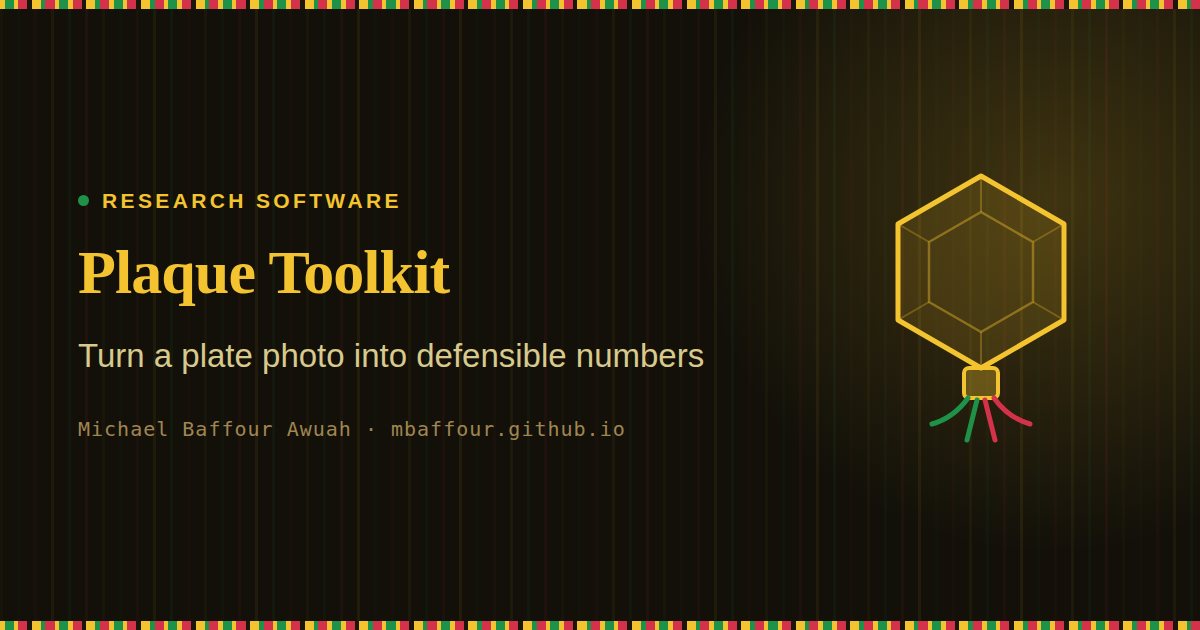
Mapping the N4 infection transcriptome with RNA-seq and DESeq2, wrapped in reproducible pipelines I package as tools so the analysis runs the same way every time. Where the bottleneck is counting rather than sequencing, I train and evaluate the model myself: the plaque-vs-texture classifier in Plaque Toolkit is a ResNet-18 trained on 15,659 boxes, scoring F1 ≈ 0.95 leave-one-plate-out, and validated against hand-labelled plates (r ≥ 0.99 on diameter, ICC 0.97 versus independent Fiji tracing). PooledPPI designs pooled AlphaFold 3 screens — predictions are hypotheses, and the top candidates are what I go back to the bench to test.
Phage Discovery
Isolating and characterizing novel bacteriophages from the environment with classical microbiology, TEM, host-range profiling, and full genomics.
From plaque to TEM to full genome. This is how I isolated and characterized Serwaa, the novel phage behind my first paper, named after my grandmother. My undergraduate mentee Annie Koh joined the work and carried much of it with me.
What I run without supervision
Phage & microbiology
Isolation from environmental samples; plaque assays, titering, host-range profiling and lysis-phenotype scoring; transmission electron microscopy; lysis-timing experiments. BSL2 culture, 8+ years.
Molecular & genomics
DNA/RNA extraction, restriction analysis, PCR and cloning; CRISPR-based deletion and complementation; genome sequencing, assembly, annotation and public deposition (GenBank PX021331 · BioProject PRJNA222858 · SRA SRR34773693); RNA-seq with DESeq2.
Protein & analytical
Protein expression; BCA total-protein and LPS/endotoxin quantification in phage lysates by LAL assay — the specification any phage preparation has to clear before it goes near an animal or a patient; GFP/mCherry reporter assays for real-time monitoring of lysis-protein expression.
Clinical microbiology, before phage
Antimicrobial susceptibility testing and MIC panels on drug-resistant clinical isolates at WACCBIP, and diagnostic bench work at the Noguchi Memorial Institute for Medical Research — the other side of the resistance problem I now work on.
Publications
A journal article and a first-author preprint on N4 lysis. Talks and posters are listed separately below.
- Serwaa genome announcement published in Microbiol Resour Announc · doi:10.1128/mra.01222-25
- First-author preprint posted on bioRxiv · doi:10.1101/2025.11.12.688109
- Thomas L. Patterson Graduate Student Fellowship · details ↓
Talks & Posters
Oral presentations and posters on N4 lysis inhibition.
- No. 01Plaque Toolkit
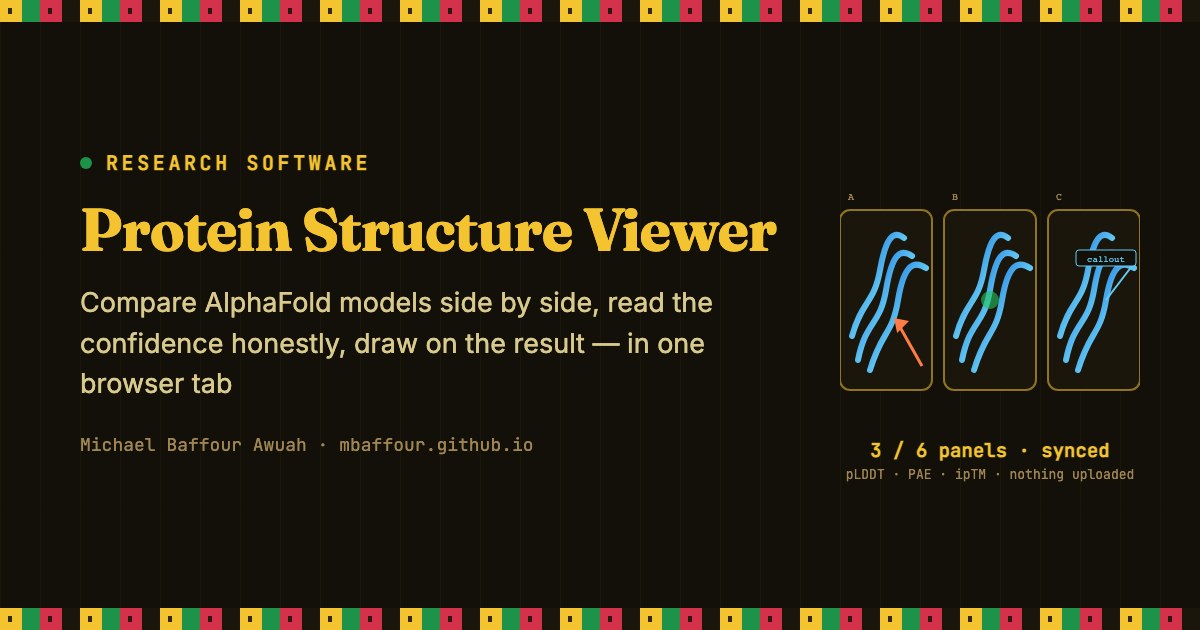 No. 02Protein Structure Viewer
 No. 03HMM Homologue Finder
 No. 04CFU Calculator
 No. 05PFU Calculator
 No. 06CellMorphR
 No. 07CFU Plot Studio
 No. 08Genomics Kitchen
 No. 09Gibson Assembly Calculator
 No. 10HMM Discovery App
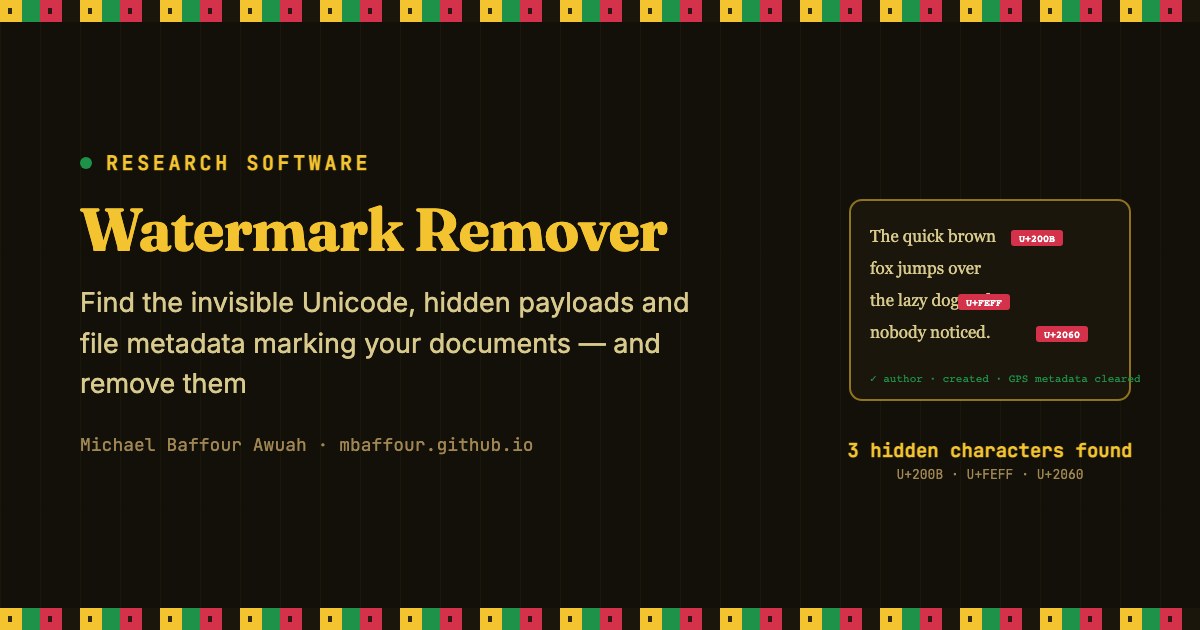 No. 11Watermark Remover
( Act II — The tools )
Nineteen open tools, each built because an experiment needed it.
See all nineteenResearch Software
Every tool here came out of an N4 experiment I needed to finish — lysis curves, plaque scoring, figure assembly, sequence prep — and I shared them because other labs hit the same walls. Browser-first, privacy-first, reproducible by default. The heavier ones are not browser toys: HMM Homologue Finder ships as a CLI with a pinned environment (HMMER 3.4, MAFFT, IQ-TREE) and golden-file regression tests, so a result from last year still reproduces today. Eight are shown below; 19 in total, the rest small utilities that do one job and stay out of the way.
“…use of the FigureLab web-based application developed by Michael Baffour Awuah…”
( Act III — The bench )
Whether it’s a new phage or a new tool, the protocol stays the same.
- 01IsolatePhages from environmental samples, purified, sequenced and imaged on the TEM.
- 02CharacteriseHost range, plaque morphology, one-step growth and lysis curves, full genomes.
- 03PerturbKnockouts, complementation and expression, to find which genes set the timer.
- 04MeasureSoftware that reads plates, curves and cells the same way every time.
- 05ShareOpen tools, deposited sequences and a preprint anyone can check.
Teaching & Mentoring
Nine courses taught across two universities, and ten undergraduate researchers trained at the bench.
Courses taught
| Course | Students | Term | Institution |
|---|---|---|---|
| BIOL 111 — Intro Biology I | 48 | Fall 2022 | Texas A&M |
| BIOL 112 — Intro Biology II | 48 | Spring 2023 | Texas A&M |
| Enzyme Action & Catalysis | 169 | Fall 2021 | U. Cape Coast |
| Biochemical Techniques (Mini Project) | 5 | Fall 2021 | U. Cape Coast |
| General Biochemistry Practical | 209 | Fall 2020 | U. Cape Coast |
| Biological Oxidation & Bioenergetics | 169 | Fall 2020 | U. Cape Coast |
| Biochemical Techniques I | 150 | Fall 2020 | U. Cape Coast |
| Diversity of Living Organisms | Class of 2023 | Fall 2020 | U. Cape Coast |
| Biostatistics | Class of 2022 | Fall 2020 | U. Cape Coast |
Microteaching mentor for incoming teaching assistants, Department of Biology, Texas A&M (2023 & 2024).
Undergraduate researchers mentored
- Annie KohCharacterization of three E. coli 4s phagesTexas A&M
- Philip LotaireN4 lysis inhibition, host specificity & receptor discoveryTexas A&M
- Matthew FanMechanism of action of bacteriocinsTexas A&M
- Teja VemulapalliBacteriophage N4 lysis inhibitionTexas A&M
- Bridget Ahema AgyemangPhytochemical evaluation of Garcinia kolaU. Cape Coast
- Bertha Klenam HamenuPhytochemical evaluation of Garcinia kolaU. Cape Coast
- Ekow EtwirePhytochemical evaluation of Garcinia kolaU. Cape Coast
- Samuel OfosuPhytochemical evaluation of Garcinia kolaU. Cape Coast
- Emmanuel LuriPhytochemical evaluation of Garcinia kolaU. Cape Coast
- Christian OkinePhytochemical evaluation of Garcinia kolaU. Cape Coast
Judge, Texas Junior Science & Humanities Symposium (Jan 2025) · Judge, SACNAS Diversity in Science Symposium (Apr 2024).
Recognition & Service
Awards, outreach, judging, and the trainees I've had the privilege of working alongside.
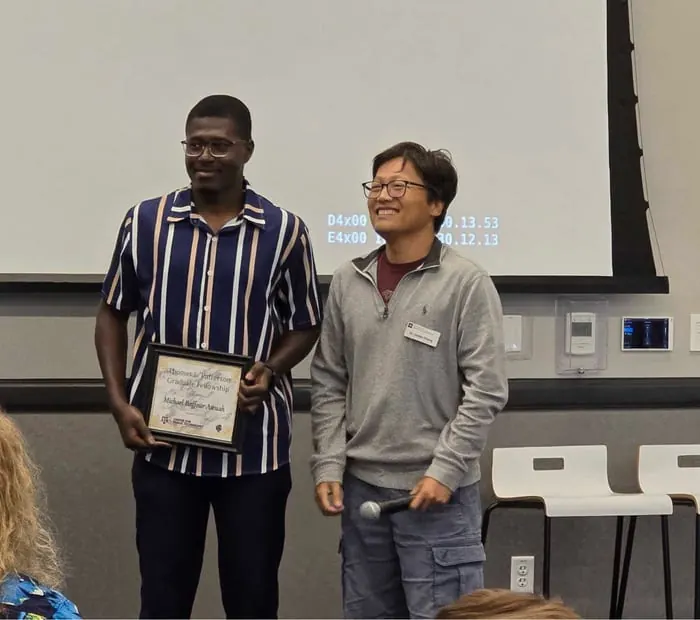 August 2025 · Fellowship
Thomas L. Patterson Graduate Student Fellowship
Awarded by the Center for Phage Technology at Texas A&M — established by Dr. Steffanie Strathdee and Dr. Thomas Patterson following CPT's landmark involvement in phage therapy in the US.
Read announcement ↗Invited Lectures & Talks
Three oral presentations on phage N4 lysis inhibition: the Bio & Chem Sciences Symposium, the Texas ASM Branch Meeting, and BIOGSA.
See gallery ↓Graduate Mentor — Texas A&M
Four undergraduates have worked with me during my PhD — Annie Koh, Philip Lotaire, Matthew Fan and Teja Vemulapalli — and ten in total, counting six I mentored at Cape Coast. Two continue with me in the Ramsey Lab today; one is now in a biology PhD program; one is applying to medical school.
Get in touch ↗Darwin Day Outreach
Public-facing science outreach demonstrating phage biology and evolutionary microbiology to K-12 students and the broader community at Texas A&M's Darwin Day events.
Texas JSHS Judging
Judge for the Texas Junior Science & Humanities Symposium — evaluating high-school research projects and providing feedback to the next generation of scientists.
SACNAS Diversity in Science Judge
Judge at the SACNAS Diversity in Science Symposium — evaluating undergraduate and graduate research presentations and supporting underrepresented scientists.
Travel & Conference Awards
Molecular Genetics of Bacteria & Phages Meeting registration waivers (2024 · $525; 2023 · $500), and the BIOGSA Engagement Scholarship (2023 · $250) from the TAMU Department of Biology.
Community & Phage Outreach
Darwin Day demos, Phage Princess & Phage Pirate cardboard outreach, K–12 visits, and microteaching mentorship for new TAs in the TAMU Biology department.
Lysis Curve Playground
Run a phage infection and watch it unfold, stage by stage. A normal phage bursts on cue. N4 senses superinfection and holds the cell hostage, keeping the culture cloudy. Drag the controls, then hit play.
The phage docks onto a receptor on the cell surface and injects its genome. The host is now infected.
Other tools I've built
Every side build — including TailFiber, the phage arcade game — lives on the other tools page.
Blog & Notes
Notes on phage biology, lab life, and tool-building.
Life in the Lab
Whiteboards, the bench, conferences, and outreach. The science doesn't happen in a vacuum.
Off the Pitch
I play soccer. Badly, enthusiastically, and most weeks — which turns out to be the same way I do science.
Let’s work together.
Collaboration, phage research, scientific software, or just talking shop — I'd love to hear from you.
Press ⌘K to jump anywhere on the site, or just send me a phage joke.